
Start your Methane Journey
An update from ICVCM: Rice methane gets its Core Carbon Principles label
The Integrity Council for the Voluntary Carbon Market (ICVCM) was established in 2021 to architect the 'Core Carbon Principles' (CCP) a rigorous, common standard for the evaluation of additionality and integrity of carbon credits. The goal of the CCP is to help buyers invest with confidence across project types, and ultimately grow the flow of climate finance.
Recently, ICVCM approved a methodology for CCP-labelled credits based on rice methane reduction. This is a game-changer for companies like Mitti Labs, who are expanding Climate-smart practices in rice farming, a major contributor to methane emissions globally.
A new baseline for the carbon market
The ICVCM's Core Carbon Principles (CCPs) were designed to serve as a universal quality threshold for carbon credits — a single reference point that buyers, regulators, and project developers could rally around. That aspiration is fast becoming reality. By the end of 2025, ICVCM had approved seven major carbon-crediting programs and 36 methodologies, with programs covering approximately 98% of market volume now holding CCP-Eligible status.
Importantly, the market is responding. CCP-labelled credits now command a price premium averaging up to 25% compared to unlabelled credits — a meaningful signal that buyers are willing to pay for verified integrity. Governments are embedding the CCPs into national frameworks, and project developers are increasingly designing to CCP requirements from the outset rather than retrofitting. As the ICVCM's 2025 Impact Report put it, what began as an aspiration is now a working standard.
The breadth of approved methodologies has also expanded considerably. Six new carbon dioxide removal (CDR) methodologies received CCP approval in late 2025 — covering geological storage approaches and concrete carbonation — alongside continued progress on nature-based solutions and agricultural emissions reduction. This diversification matters: it signals that the CCP framework is not just for forests, but for the full range of credible climate interventions.
Rice methane gets its label
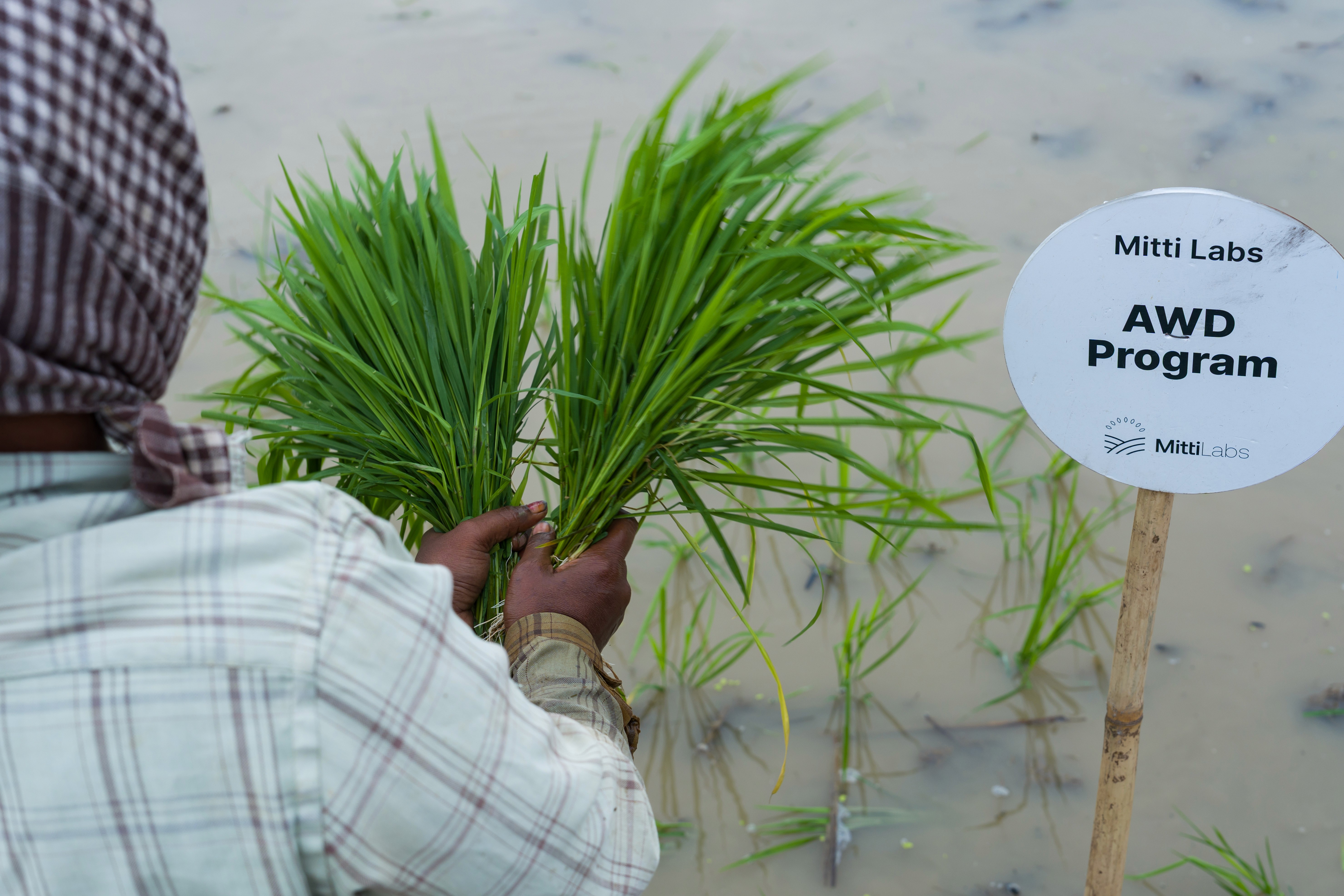
The most consequential recent development for agricultural carbon markets is the February 2026 CCP approval of Gold Standard's Methodology for Methane Emission Reduction by Adjusted Water Management Practice in Rice Cultivation (v1.0) — the first rice cultivation methane avoidance methodology to achieve CCP-Approved status.
This is a significant milestone. Rice paddy cultivation accounts for roughly 12% of global human-caused methane emissions, and methane is around 85 times more potent than CO₂ over a 20-year timeframe. Practices like Alternate Wetting and Drying (AWD) — periodically flooding and drying fields rather than keeping them continuously flooded — can reduce methane emissions by up to 50%. The ICVCM's approval gives these interventions the credibility stamp they need to attract serious corporate buyers.
The approval is conditional, however, and the conditions matter. Credits issued under this methodology are only eligible for CCP labelling when two specific conditions are met: the project must use the "Activity Penetration (AGR Project Specific)" approach to demonstrate additionality, and it must account for the Rule Update on Soil Organic Carbon Loss Risk. Roughly 50,000 credits already issued under this methodology do not meet the first condition, and will therefore not be CCP-eligible. Future issuances — and Gold Standard projects alone are expected to generate up to 3.2 million credits over the next five years, primarily from India but also across Pakistan, Vietnam, Bangladesh, Cambodia, and Indonesia — will need to comply from the start.
What this means going forward
The rice methane approval arrives at a moment of real momentum. The convergence between voluntary and compliance carbon markets is accelerating, with the CCPs increasingly serving as a bridge. Southeast Asia's carbon market alone is projected to reach an estimated $3 trillion by 2050, and the ICVCM's November 2025 MOU with Indonesia's Ministry of Forestry signals growing government-level alignment with the CCP framework in one of the world's most important agricultural carbon markets.
For project developers and buyers, the practical message is clear: the bar for high-integrity agricultural carbon credits is now well-defined. Projects that meet CCP conditions will be positioned to access a buyer market that is growing more discerning — and more willing to pay for quality. Those that do not will face increasing pressure to upgrade or be left behind.
The era of caveat emptor in carbon markets is not over, but it is ending. The ICVCM's steady expansion of CCP approvals — including, now, into rice — is giving buyers a genuine framework to distinguish credible climate action from greenwash. For an agricultural sector that has long held enormous, under utilised mitigation potential, that is welcome news.
Sources: ICVCM CCP Impact Report 2025; ICVCM assessment announcement, February 2026; Gold Standard Methodology for Methane Emission Reduction by Adjusted Water Management Practice in Rice Cultivation v1.0
Offset your emissions with high-quality carbon credits
Previous article
Next article
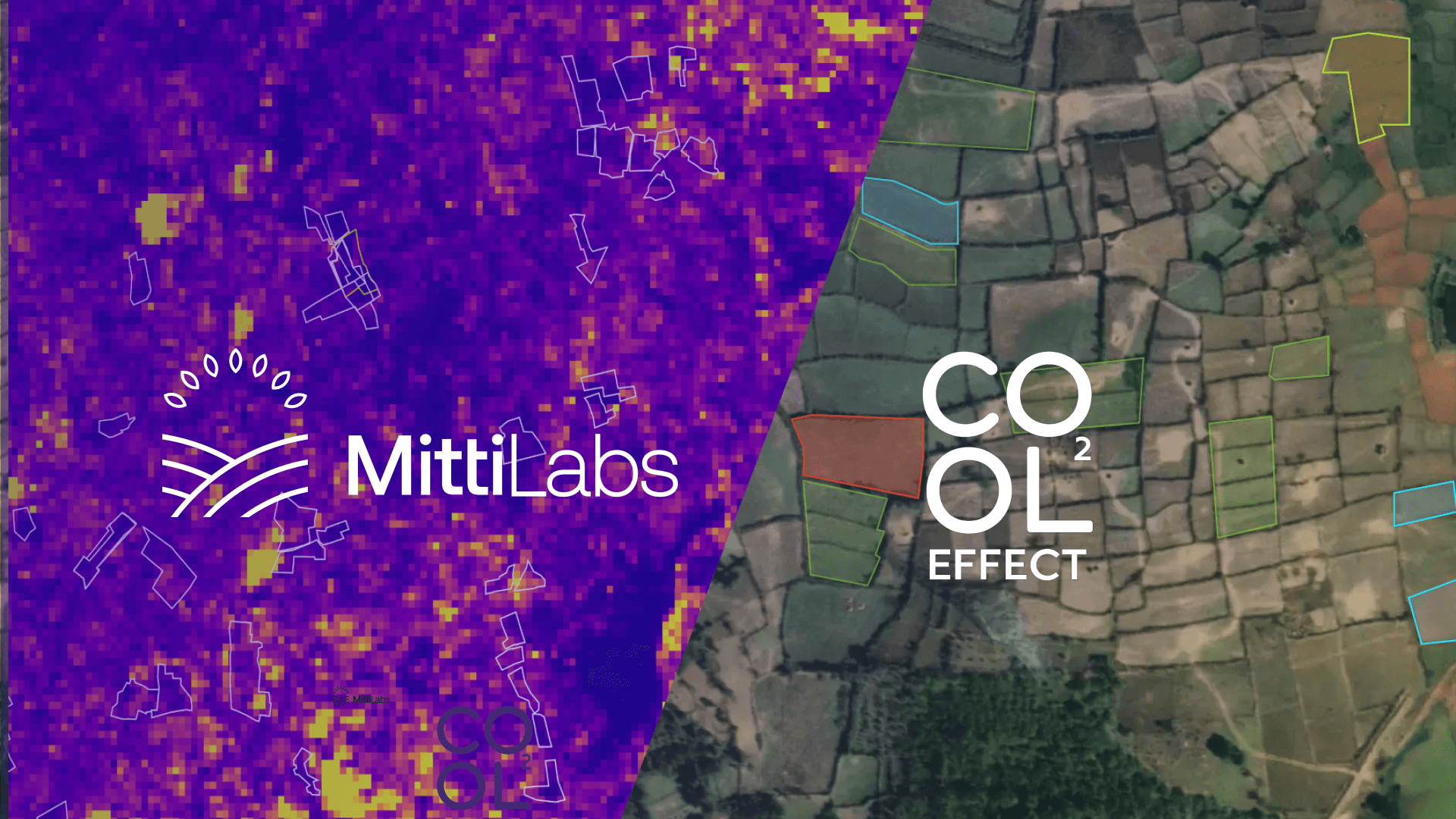
Cool Effect and Mitti Labs: partnering on a world first for superpollutant credits based on rice methane reduction
Start your Methane Journey
Copyright 2025 © MittiLabs. All rights reserved.