
Start your Methane Journey
The other half of global warming, and what we can do about it
We talk about carbon dioxide constantly. It dominates climate policy, corporate sustainability reports, and public debate. Yet there is another family of greenhouse gases (methane, refrigerants, nitrous oxide, black carbon) that is collectively responsible for close to half of today's warming. These are superpollutants, and they remain dramatically underfunded and under-addressed.
That is the premise behind Beyond CO₂, a new platform launched by Mitti Labs to educate and inspire action on superpollutant abatement. Born out of a 2025 New York Climate Week event, the platform offers a structured overview of the science, the markets, and the companies working to close what may be the most important gap in climate finance today.

What are superpollutants?
The UNEP's Climate and Clean Air Coalition defines superpollutants as atmospheric pollutants with greater warming impact per tonne than carbon dioxide. The main categories are methane, tropospheric ozone, nitrous oxide, black carbon, and hydrofluorocarbons (HFCs). They are emitted across agriculture, fossil fuel extraction, waste management, and industrial processes.
Methane is the largest single contributor at roughly 24% of current warming, driven by livestock, rice farming, landfills, and fossil fuel leaks. HFCs — the refrigerants in air conditioners and cooling equipment — account for a further 2%, with a warming potential hundreds to tens of thousands of times that of CO₂ over a 20-year period.
What makes superpollutants particularly significant — and particularly tractable — is their short atmospheric lifetime. Unlike CO₂, which accumulates over centuries, most superpollutants break down within years or decades. That means cutting their emissions today delivers measurable cooling within years, not generations.
''Studies suggest that mitigating the full stock of superpollutants could avoid more than half a degree Celsius of warming by mid-century''. Calyx Global & Carbon Containment Lab, 'Superpollutants, tackling a major climate threat'.
A market that is growing. But far from its potential
The voluntary carbon market has begun to respond. Methane credit retirements reached 19.4 million tonnes CO₂e in 2025, a 128% increase from 2015. The ICVCM's Core Carbon Principles label — the market's most rigorous integrity standard — was first awarded to superpollutant project categories, specifically landfill gas and ozone-depleting substances, ahead of forest conservation and other more prominent credit types.
And yet the gap remains enormous. Since 2015, the VCM has addressed roughly 420 million tonnes of superpollutant emissions in total — less than 3% of what is emitted globally every year. Pollutants responsible for almost half of today's warming receive less than 5% of climate funding.
The economics make this gap harder to justify. Superpollutant credits typically trade at $10–$20 per tonne CO₂e, compared to $187–$349 for durable carbon removal. Research suggests each dollar invested in superpollutant abatement delivers more than four times the near-term climate benefit of the same dollar spent on CO₂ reduction. The market has not yet priced this in.
“Addressing superpollutants is scientifically and economically compelling. In addition to their extraordinary climate impact, superpollutant credits often trade at less than half the price of CO₂ credits.’’ Dean Takahashi - Executive Director, Carbon Containment Lab
The projects making it real
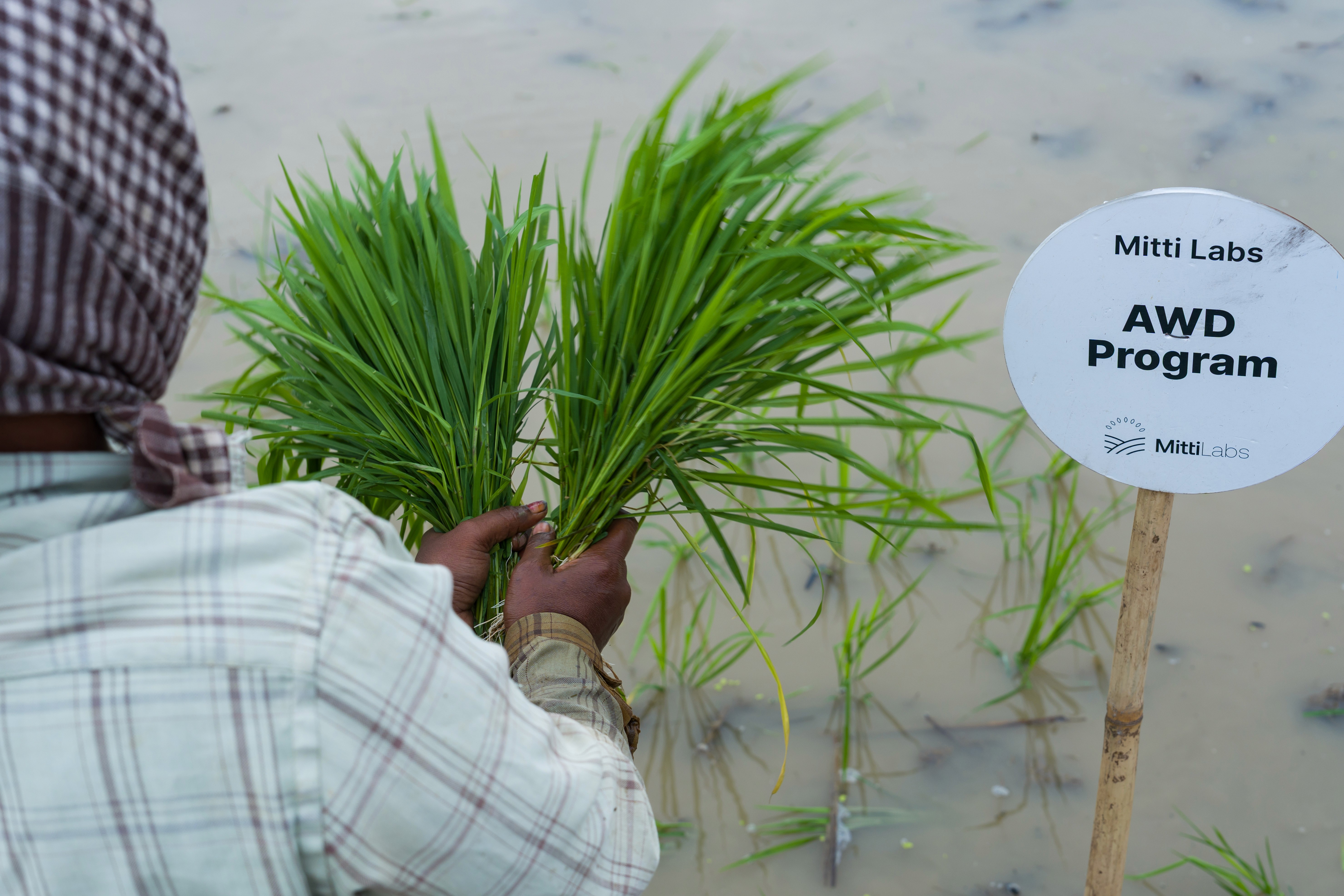
Beyond CO₂ profiles a range of project developers already working at scale. Tradewater collects and destroys ozone-depleting refrigerants and plugs leaking orphaned oil and gas wells, having eliminated more than 11.3 million tonnes CO₂e across seven countries. ClimateWells addresses emissions of aging oil and gas infrastructure, with credits earning A-ratings from BeZero and buyers including JPMorganChase and Chubb. Recoolit recovers refrigerant gases from end-of-life air conditioners in Indonesia, backed by a multi-year Google purchase agreement. And Mitti Labs works with over 70,000 smallholder farmers in India to adopt Alternate Wetting and Drying in rice cultivation, reducing methane emissions by up to 50% and water use by up to 40%, with verification powered by NASA-supported satellite technology.
The road ahead
A small but growing cohort of corporate buyers (Google, Netflix, Workday, Cool Effect) have begun integrating superpollutant credits into their climate portfolios. In March 2026, Google pledged $50 million toward superpollutant elimination as part of the newly launched Superpollutant Action Initiative, a coalition targeting $100 million in deployment by 2030.
"Action this decade can limit peak warming by up to 0.1°C, buying critical time for long-term decarbonization, protecting communities, and reducing the risk of dangerous climate feedbacks. By aggressively cutting superpollutant emissions, we can avoid more than 0.5°C of warming by 2050.'' Beyond Alliance - Why Superpollutants Matter
The infrastructure is in place. The science is clear. The projects are proven. What the market still needs is more buyers and ecosystem players who understand what superpollutants are, why they matter, and how to act on them with confidence. That is exactly what Beyond CO₂ was built to provide.
Explore the platform now at: beyond-co2.com
Offset your emissions with high-quality carbon credits
Previous article

Next article
Start your Methane Journey
Copyright 2025 © MittiLabs. All rights reserved.